The following interview first published 14 January 2024 is reposted here from Military Thriller Book Group with permission.
Aiden Bailey was one of our original group members. His Simon Ashcroft thrillers are fantastic. Best of all, Aiden has a new series firing off the end of this month, The Trigger Man and and thanks to Deep Ranjan Sarmah we have a short Q&A with Aiden. Also, check out Aiden’s and Andrew Warren’s co-written thriller novels, two of the best at the thriller genre.
Your upcoming Trigger Man series featuring Mark Pierce is widely touted as a blockbuster cross between the Gray Man series and Victor the Assassin series. What can you say about it?
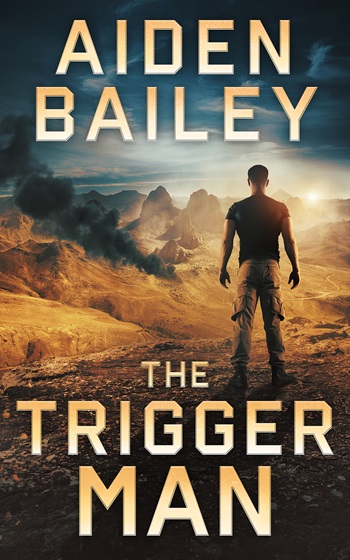
The two series you mention by Mark Greaney and Tom Woods heavily influenced the first book, The Trigger Man, when I was developing my action espionage thriller series.
Trigger Man is the code name for CIA operator Mark Pierce, who’s conducting a dangerous mission in the heart of the West African Sahara Desert, hunting a French arms dealer selling weapons to terrorists in the hope of escalating a war in the region. Pierce is also very much at war with the dangers of a baking desert as much as he is fighting insurgents.
Needless to say, everything is more complex and deadly than it already seems, and Pierce soon faces serious adversaries in the actual frontline of the War of Terror.
You also have another two-part series featuring Simon Ashcroft. It is considered to be one of the smartest thrillers written. What can you say about it, and will there be any third book in the future?
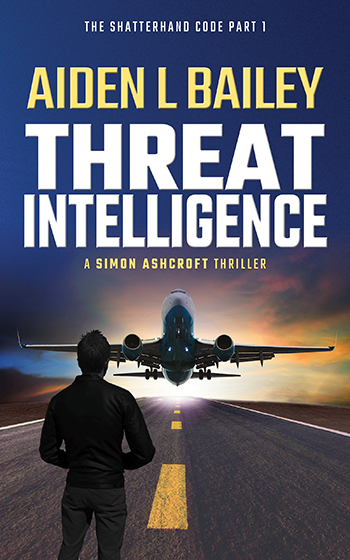
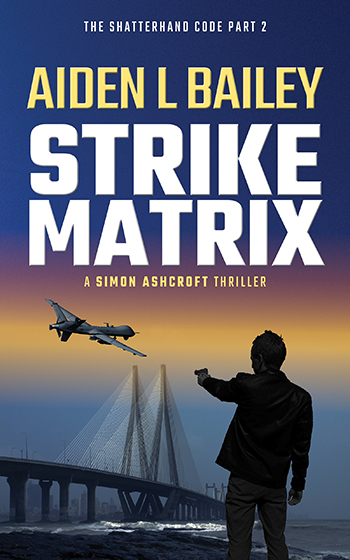
These books are called Threat Intelligence and Strike Matrix, and written back in 2016, they detail what could happen in a modern world if super general artificial intelligence became a reality. It’s more dystopian- and techno-thriller mixed with the adventure and spy action genre, than the straight espionage action thriller that The Trigger Man is. Think Inception meets Blood Diamond.
Many readers now tell me my book is rather prophetic to current advancements in AI technology impacting the world today, and I’m rather proud of what I achieved with that book.
I do plan to re-edit and combine as a single book in the future, but there will be no further sequels. Everything is very contained, and when you reach the twist at the end, you’ll see why no other books will work in this series.
All your books are globetrotters taking place in Africa, India, Australia and even Antarctica. How do you make sure to bring them to life? How do you choose these locations? Was getting bitten by Australia’s largest spider part of your authentic been there done that research?
I’ve been lucky in my life to have visited dozens of countries in six continents, and my experiences overseas do heavily influence my work. I’ve also travelled and lived across Australia, including extended periods in the outback desert regions of my homeland.
I also read widely and watch documentaries on geopolitics, science and technology, culture, human history and natural history, and economics. So, I’m constantly filing away ideas as I come across them, to combine elements into stories as I plot them out. I also work in the engineering and defence sector, so that’s experience that also fills me with ideas.
Yes, a couple of years back a red back spider bit me, and it all most killed me! I’m only around today because of modern science and medicine. So, yes, it’s true, Australia is home to many of the world’s most dangerous animals.
Perhaps Trigger Man will discover this too when I eventually send him to the Land Down Under.
Readers love your characters. They are very memorable and make a lasting impression on a reader’s mind. Do you actively focus so much on characters? What come first, characters or plot?
Plot always comes first, and the story is important to me. But a plot without characters is not really that interesting. Characters work when they have motivations and agency, but also when there are limitations in the character and their belief systems.
Not everyone reacts rationally to situations when confronted with challenges and dangers, and a better-rounded character will be more interesting to a reader if they operate logically within the confines of their abilities and limits.
That said, I’ve worked hard to make Mark Pierce as competent as I possibly could, because that is the trope that readers of the adventure thriller genre look for. Think John Milton (The Cleaner) or Jack Reacher (Killing Floor). They are highly competent heroes, but they have belief systems that limit what they can do, and this makes them more interesting as a result.
Who are your inspirations? What do you advise aspiring authors?
Early authors in this genre who inspired me are Desmond Bagley, Ian Fleming, Martin Cruz Smith, Wilbur Smith, and Len Deighton, and the James Bond, Jason Bourne and Indiana Jones films. Today I read widely in the genre and find there are plenty of great authors out there, too many to mention.
My advice to aspiring authors is to first establish yourself in a second career that isn’t a novelist, as there is no guarantee you’ll ever make money in this business, but also to give you real-life experiences to incorporate into your stories.
Second, I advise you need to enjoy the process of writing and not just the outcome, otherwise you could be in for a long slog with no satisfaction. Third, expect it to take time to become a talented writer, and it could be decades in the making, achieved through writing, reading, understanding the craft, and never giving up. Every writer, and I mean everyone, starts off as awful, and only practice eventually makes them good.
Do you write in other genres as well?
I’ve written science fiction and horror fiction under another name, David Conyers, most notably Cthulhu Reloaded, which features an Australian military soldier and spy at war with the forces of Lovecraftian alien gods. But read The Trigger Man first. It’s a much better book!